Photojournalism: History and Practice (1960-Present)
This page is created as a resource for students studying Photojournalism History and Practice using open sources.
Content in continuous development.
Don McCullin
1935 -
(17)
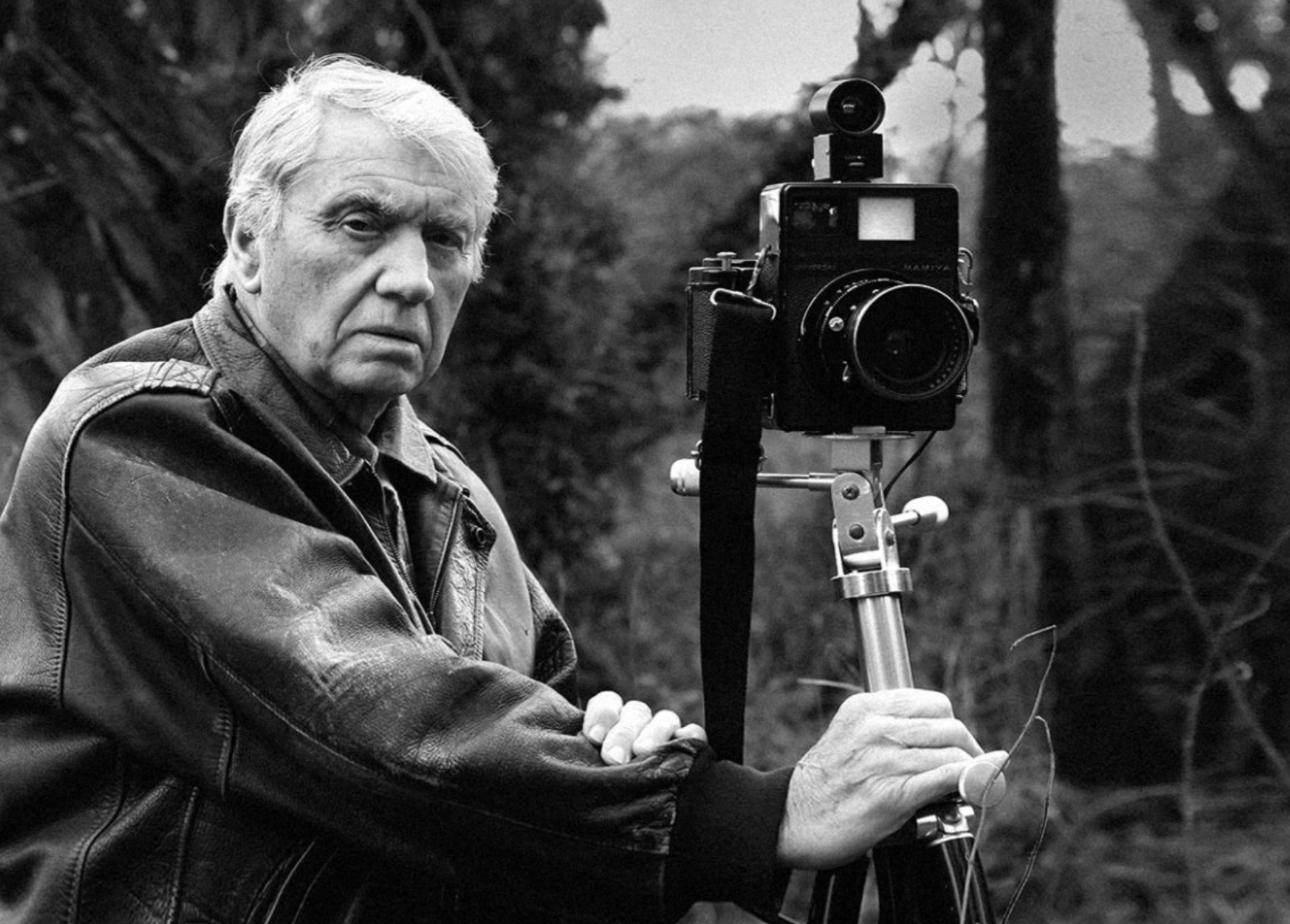
Photo: DonMcCullin.com
Don McCullin is a British photographer who has been working since 1959. He was introduced to photography while serving in the Royal Air Force and upon return home after his service he bought a camera and began photographing scenes in his hometown, London.
One photo of a local street gang was purchased for publication by The Observer newspaper and so began his career.
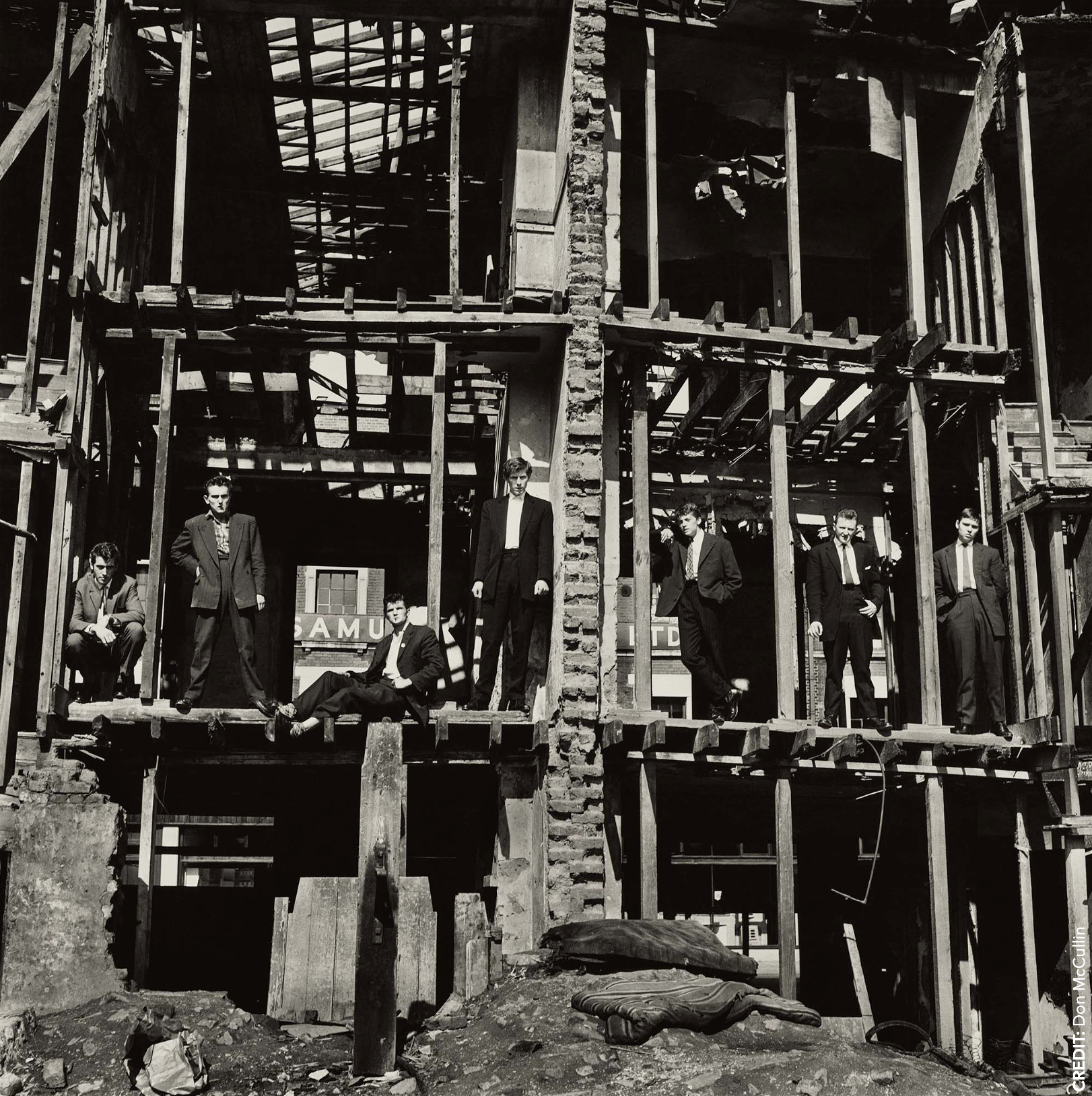
‘Guvnors, Finsbury Park Gang, 1958.
Magnum Photos.
One of his first major assignments was covering the construction of the Berlin Wall between East and West Germany in 1961.
Through most of the 1960s and 1970s his work focused on covering wars around the world including the Vietnam War. Between assignments in war zones McCullin, like many other well known photojournalists, has focused on calling attention to human suffering. He says the desire to do so derives in part from his own upbringing in an impoverished family in London during World War II and its aftermath.
Don McCullin Biography - DonMcCullin.com
McCullin, like many photographers, does not like being labeled as a “war photographer” although he doesn’t fight the description. In several interviews he has given over the years he describes himself more as a photographer of the human condition. War is part of that condition.
In the last several decades, when not traveling, he has worked on still life photography and landscape photography. Many of the landscapes are of the area near his home in England. (The turn away from suffering toward subjects less emotionally draining is similar to the career path of Sebastiao Salgado who is featured in a later post).
At War; Photographer Don McCullin - The Economist
War Photographer Finds Peace - CBS News
The Photography of Don McCullin - Tatiana Hopper
Don McCullin Photographs - Lens Culture
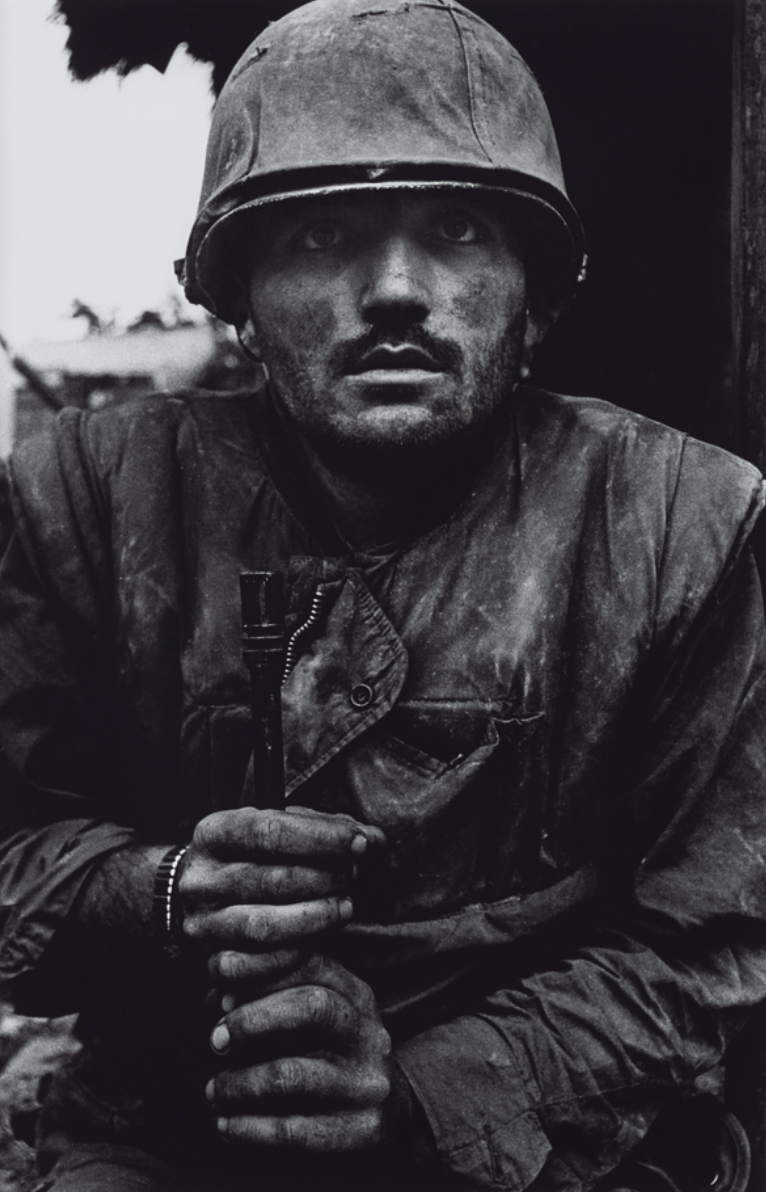
Soldier, Battle of Hue, Vietnam, 1968
Credit: Don McCullin
Catherine Leroy
1944-2006
(18)
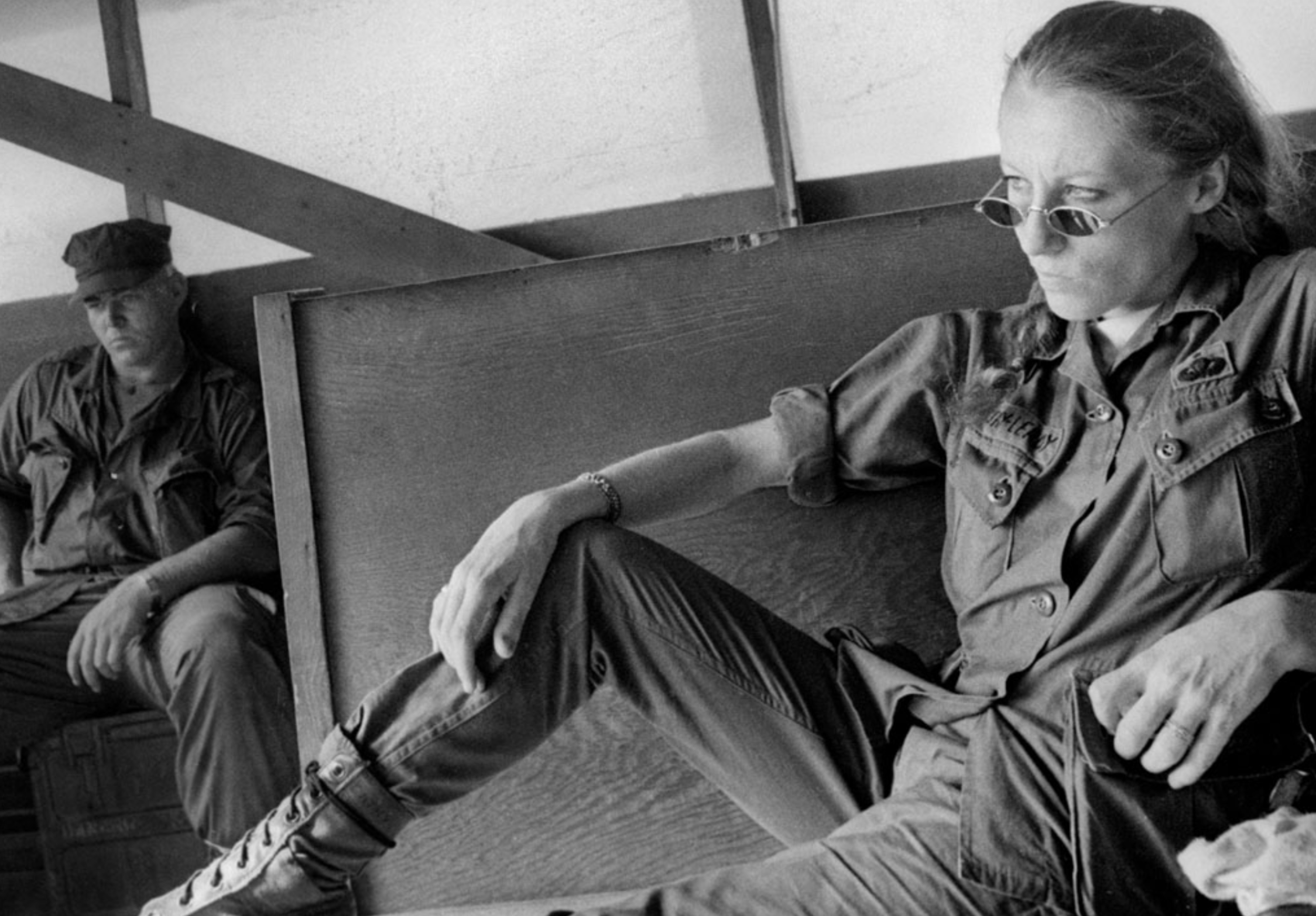
Catherine Leroy was a French photographer who simply decided to become a photojournalist during the height of the American War in Vietnam.
At 22 years old, she bought a camera and booked a one-way ticket to Vietnam. Once she got there she somehow convinced the Associated Press to give her press credentials and began a long career of photographing conflict. She was wounded during her time covering the war. She was taken prisoner by the North Vietnamese and she convinced them to allow her to photograph their units at war. She was one of only a few photographers to go behind enemy lines with the enemy.
After Vietnam she photographed conflicts in Lebanon and Northern Ireland.
She is best known for her ability to get close to the subject. In fact, she was cropped out of a well known photo taken by Larry Burrows(see previous entry).
One her best known series of photos features an Army medic tending to a dying soldier in the field. Later in life, as her last paid assignment, she photographed the medic as an older man living in the United States. She survived all her close encounters during various wars and died of cancer in 2006.
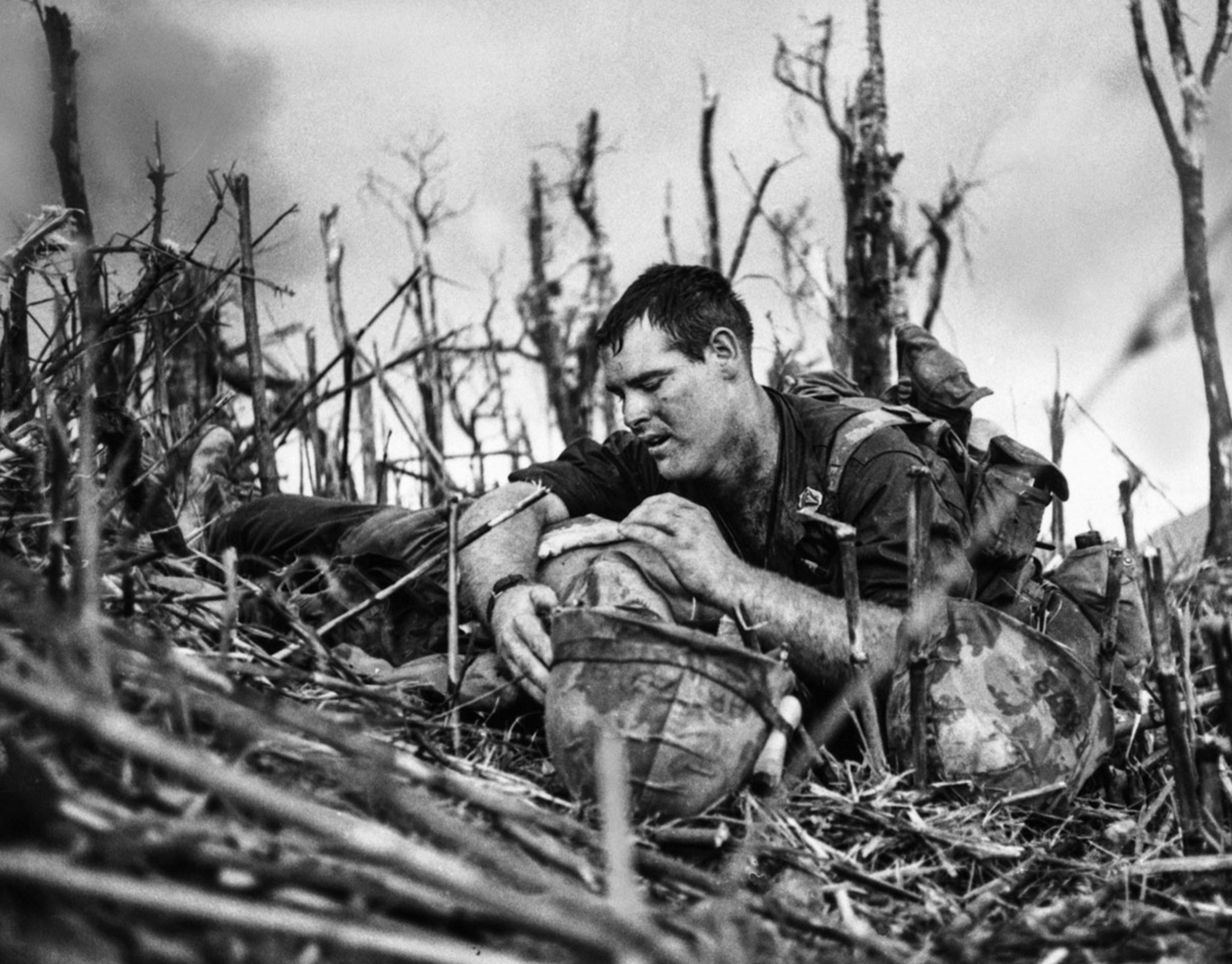
Must Know Photograhpher - Catherine Leroy - (Zach Dobson)
Sebastiao Salgado
1944 -
(19)
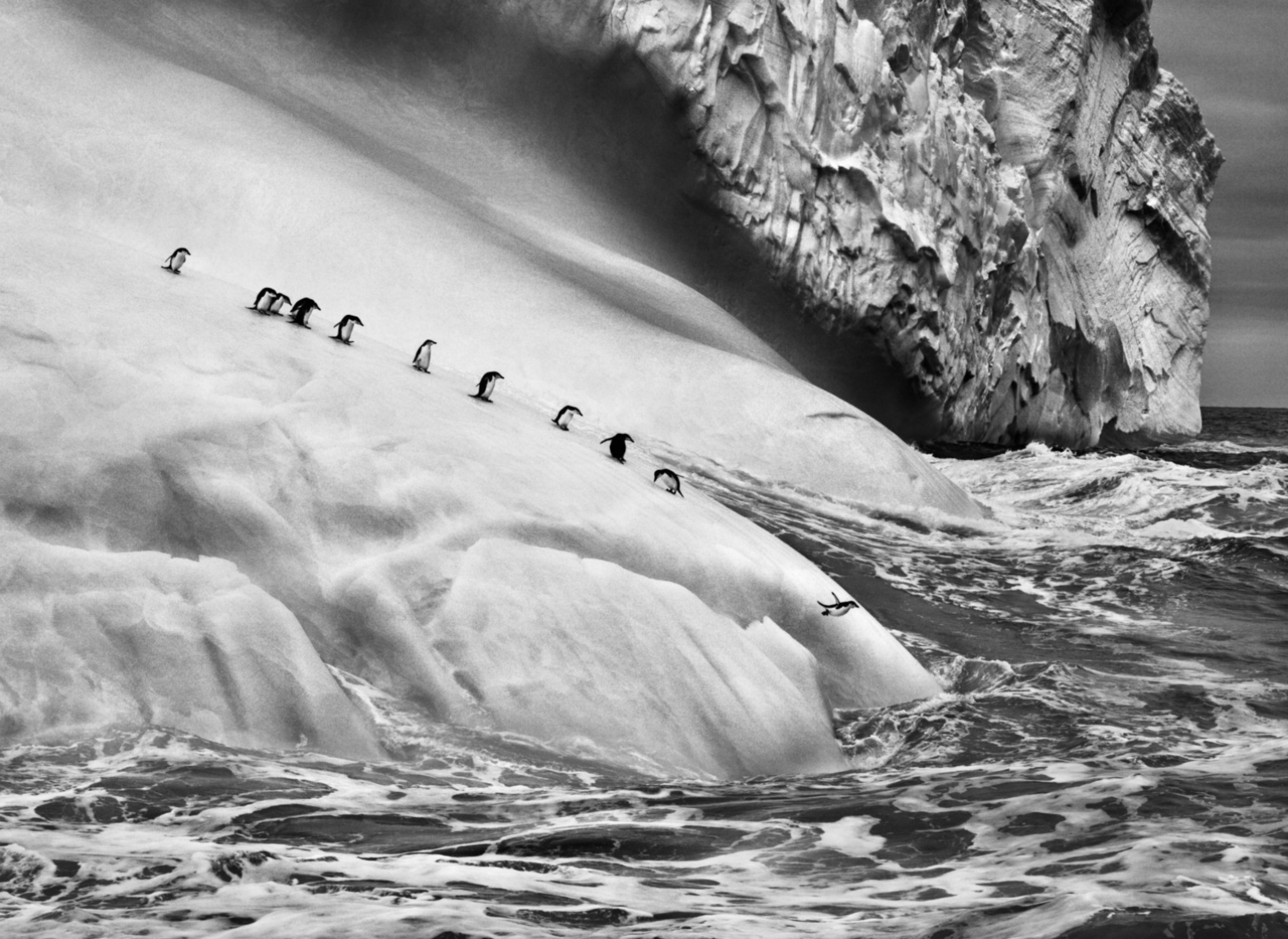
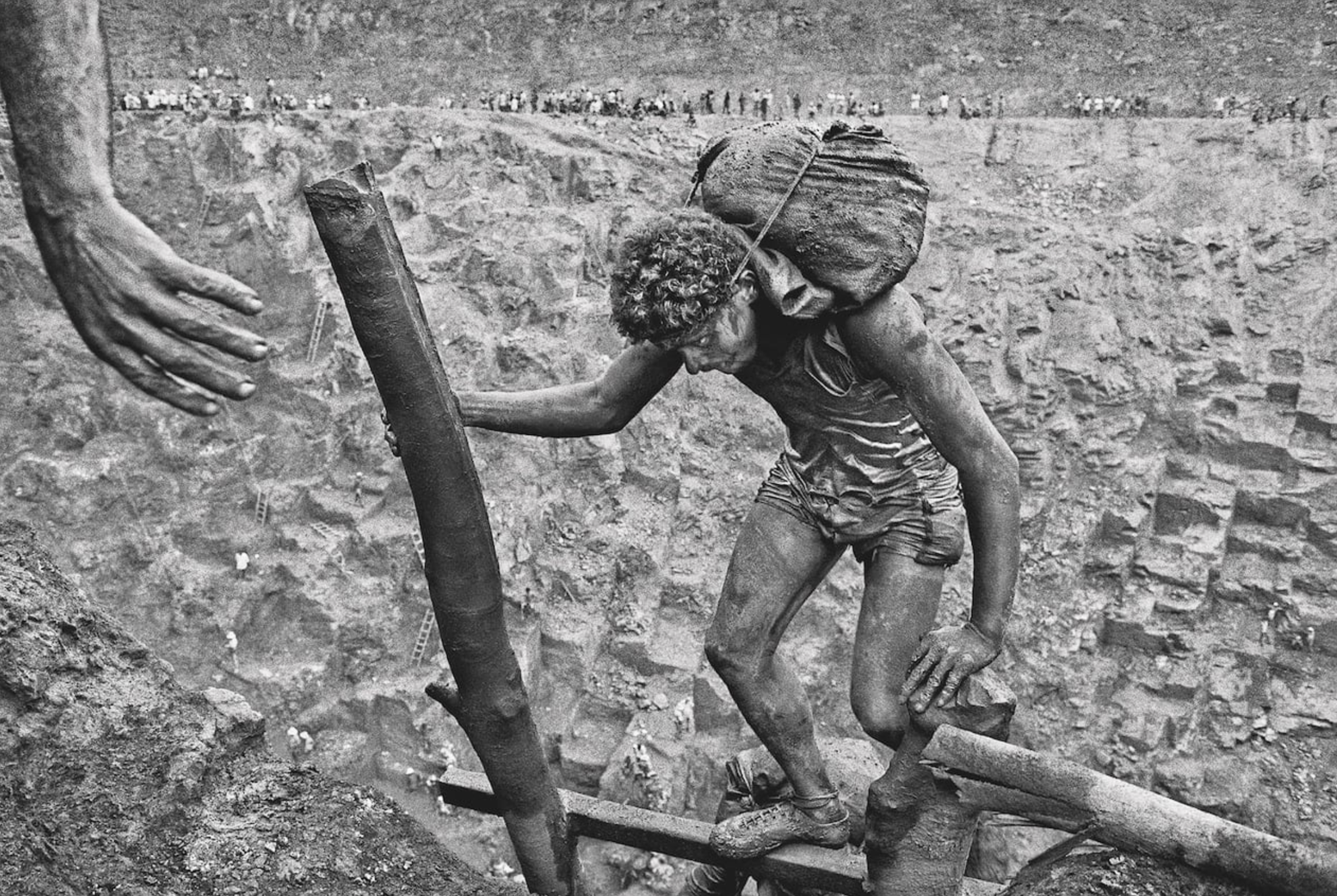
Sebastiao Salgado is in a class by himself in the world of photojournalism. He is dedicated to long-term projects that result in books and fine prints. His style is primarily black and white, yet cinematic.
Salgado is from Brazil and was trained as an economist. Working for the International Coffee Organization he began making many work related trips to Africa. He began documenting those trips and eventually committed full time to being a documentary photographer in his 30s. Documentary photographers differ from daily news photographers in that they often spend months or years getting close to their subject matter and when a project is complete, it may result in a relatively small number of images compared to all those taken during the course of the project.
Salgado is known best for his images of labor exploitation, human suffering, and in recent years the state of the environment. In numerous interviews, he has explained that his photography of the human condition began to result in the loss of his own physical health. His wife urged him to focus less on injustice in the world and more on saving the planet from an environmental perspective.
His most famous works include images of gold mining in Brazil and the natural world for a project called Genesis.
Sebastiao Salgado Bio and Portfolio - International Center for Photography
Gold by Salgado - British Journal of Photography
Genesis - International Center for Photography
Sebastiao Salgado - TED Talk 2013
James Nachtwey
1948 -
(20)
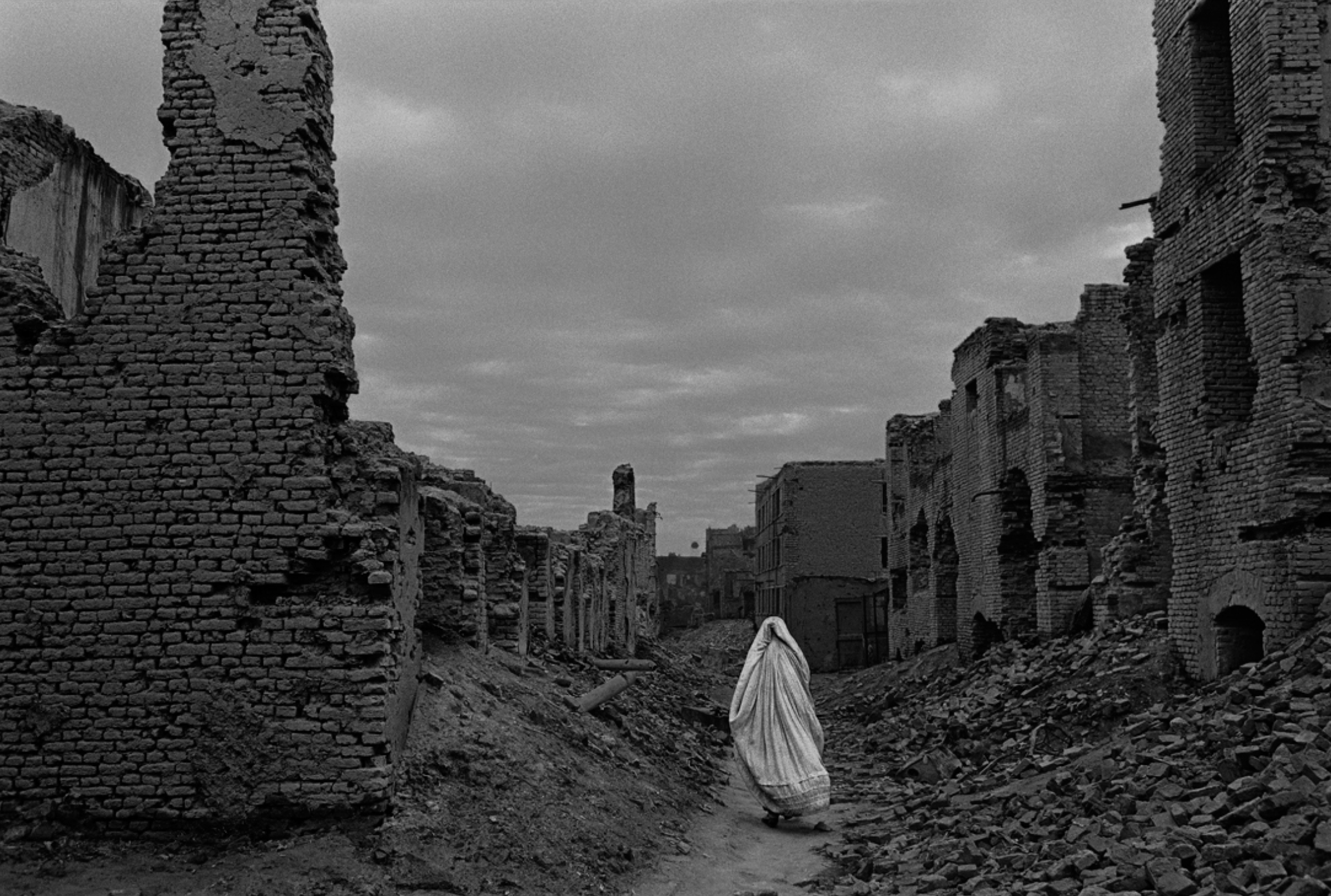
Kabul, Afghanistan, 1996.
James Nachtwey Archive, Dartmouth.
James Nachtwey graduated from Dartmouth College in 1970 and began working as a photojournalist in Albuquerque, New Mexico in 1976. In a segment of an interview included in this posting, he says witnessing the Vietnam War when he was a teen-ager convinced him that he wanted to be a war photographer. He was not motivated by the excitement of being in a war zone, he was motivated by the need to go out in the world and tell the truth. The Vietnam War and the U.S. role in that war made him question everything he thought he believed about his country.
After working for a few years in New Mexico, he moved to New York City to begin his career as a freelance photographer. His first major assignment was to cover the war in Northern Ireland known as “The Troubles.”(1981)
From there his career followed the timeline of several wars and trouble spots around the world. He worked for many years for TIME magazine and later worked through several photo agencies, including the VII Photo Agency that he helped found in 2001. He left VII ten years later.
Nachtwey’s work has been exhibited in many museums and public exhibitions. It may strike some people as strange that work meant to capture a moment in time as part of the journalistic effort to inform might later be considered art, but that is the case with Nachtwey’s work and many of the other photographers featured in this collection.
Like other war photographer’s Nachtwey is not entirely comfortable with that title and has described himself as an “anti-war photographer.” He believes that by bearing witness to horrible events and sharing his experiences with the world, he might convince humanity that war is something that should be avoided at all cost.
In an interview with CBS several years ago, he said that when he decided to become an anti-war photographer, he accepted the fact that to be successful at it, to be committed to it, he would not be a good husband, or father, so he acknowledged to himself that he would never marry or have children.
Images from the Archives of James Nachtwey - Dartmouth
War Photographer(Interview segment)
James Nachtwey Ted Talk - 2007
James Nachtwey CBS 60 Minutes Interview - 2024
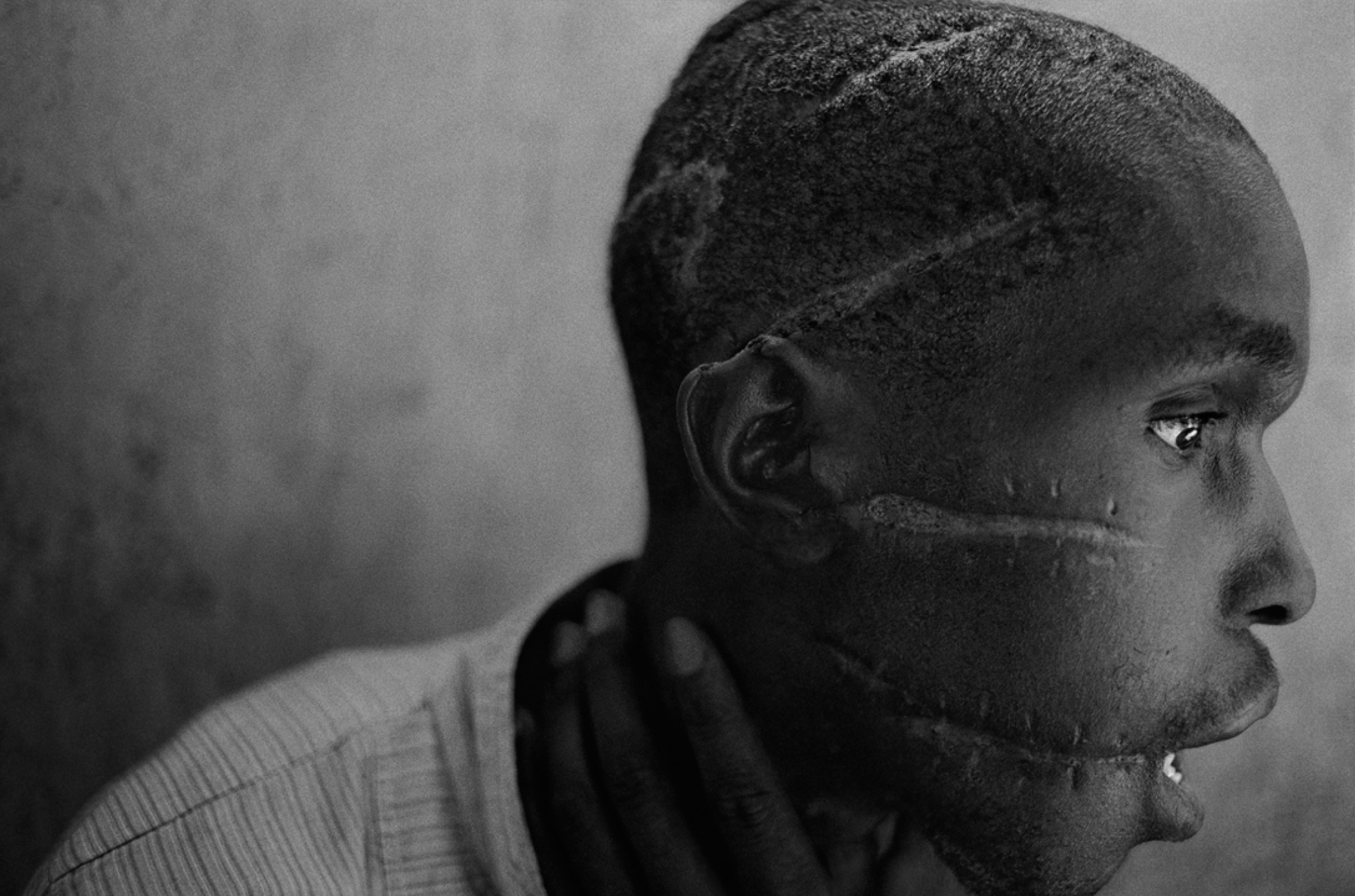
Victim of a machete attack in Rwanda, 1994.
Dartmouth.
Carol Guzy
1956 -
(21)
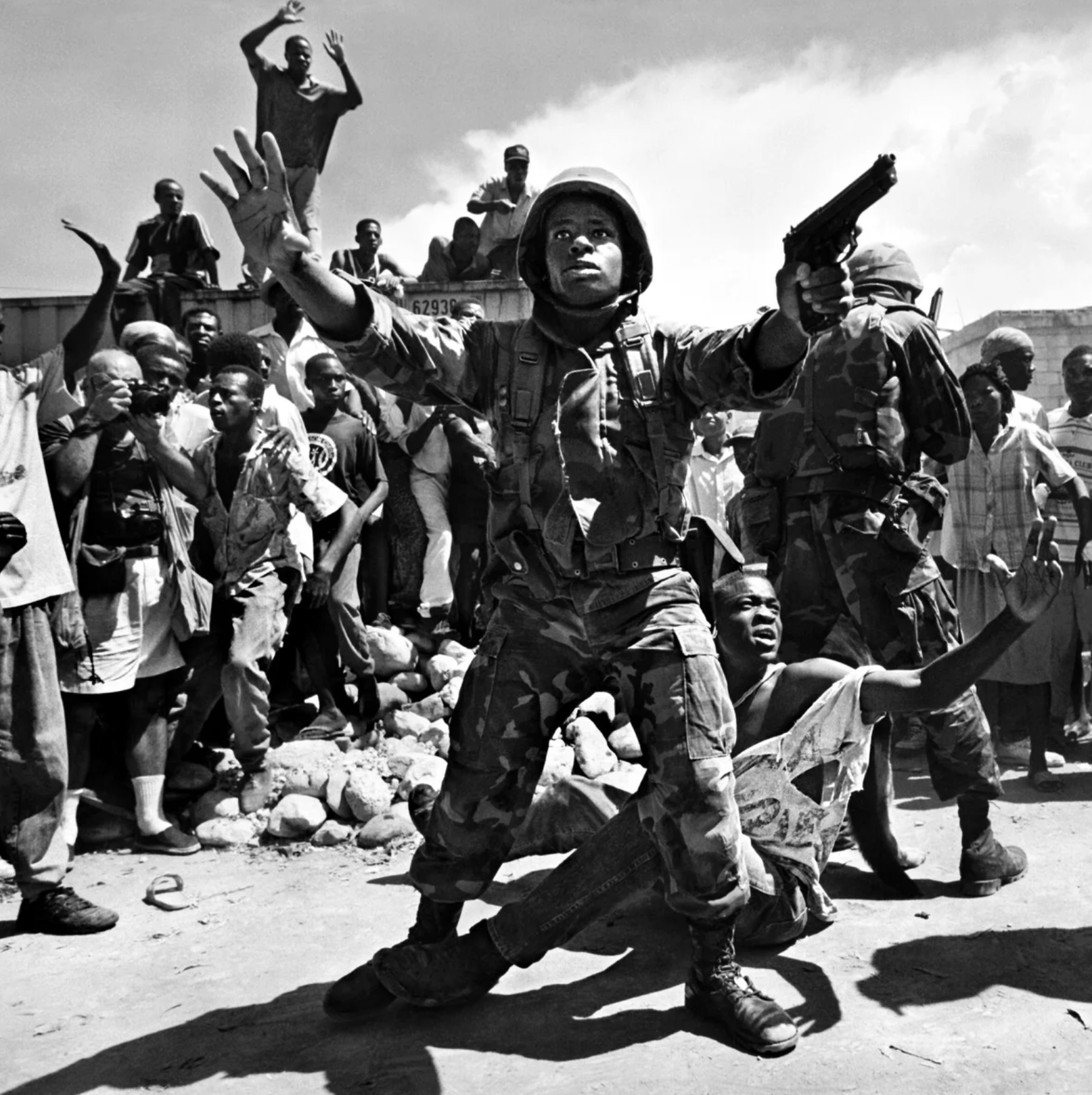
American soldier in Haiti, 1994.
CarolGuzy.com
Carol Guzy is an American photographer. She grew up in Pennsylvania and earned an associates degree in nursing before changing her career goals and studying photography at the Art Institute of Fort Lauderdale in Florida. She graduated in 1980.
After interning at the Miami Herald she was hired as a staff photographer and in 1988 got a job with the Washington Post. She stayed there until 2014 and for the last decade has been a freelance photojournalist.
She has reported from several war zones and has completed many projects that fall into the category known as “humanitarian journalism.”
The photo at the start of this post was taken in 1994 in Haiti. It pictures a U.S. soldier guarding a man from a mob who suspected him of throwing a grenade into a pro-democracy protest. The U.S. had troops in Haiti as part of a peace keeping mission. For this photo Guzy won one of her four Pulitzer Prizes.
Carol Guzy.com - Photos and Biography
Carol Guzy Wins Fourth Pulitzer - CBS News
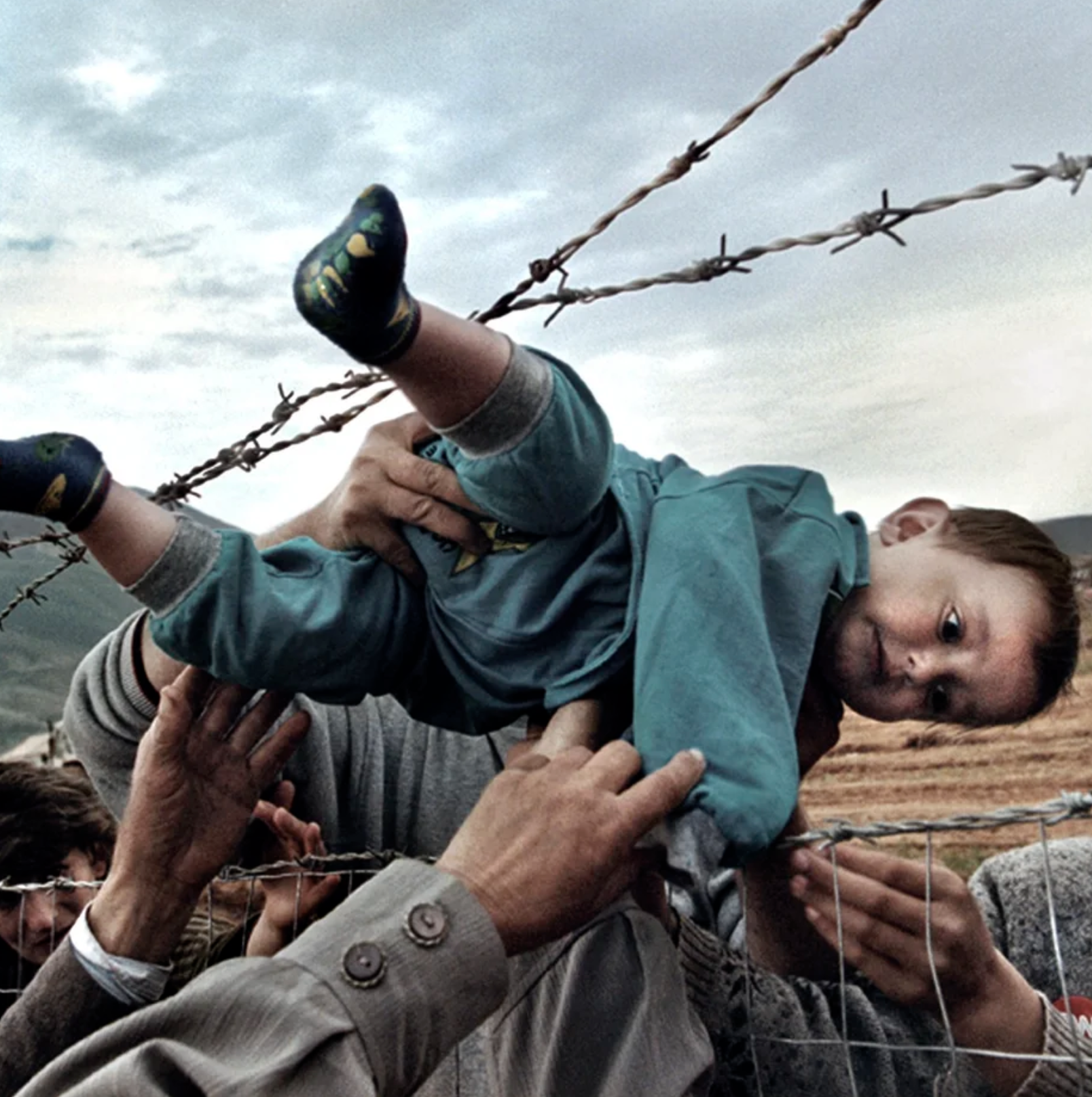
One of a number of children passed through barbed wire in the war in Kosovo. 1999.
CarolGuzy.com
Lynsey Addario
1973 -
(22)
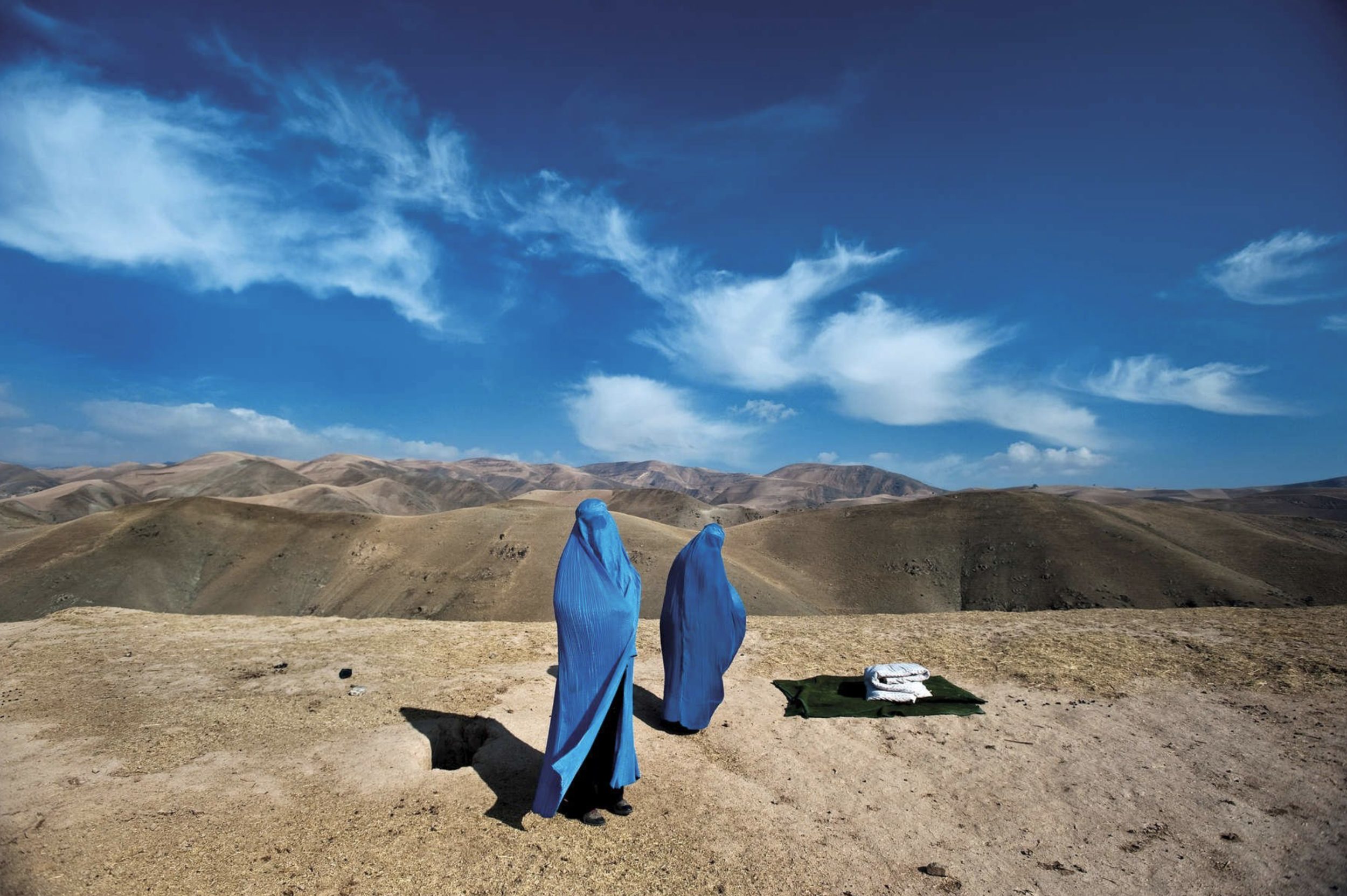
Afghanistan.
LynseyAddario.com
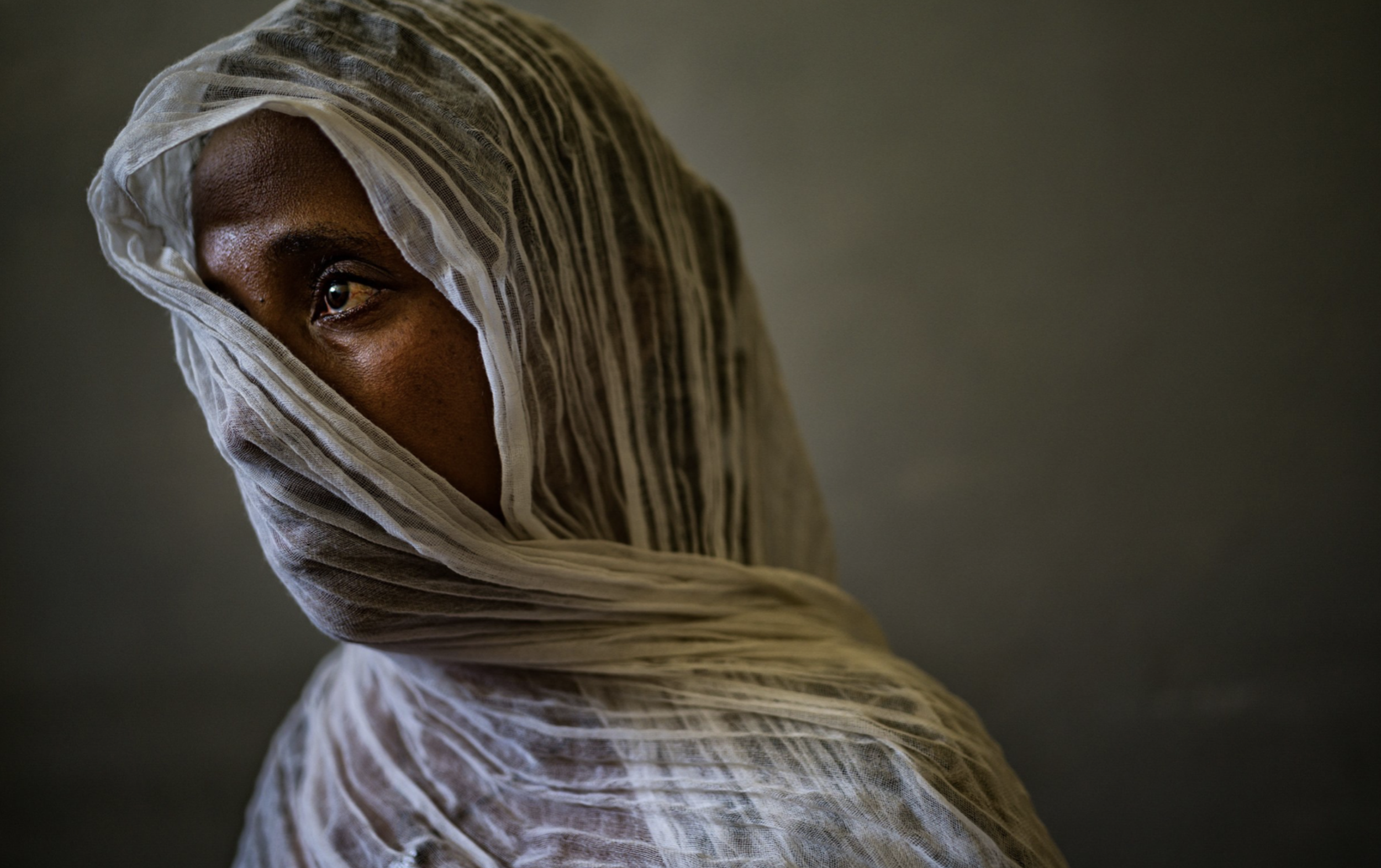
Lynsey Addario is a photographer for the New York Times who has also published work with National Geographic. She grew up in Westport, Connecticut.
Beginning her career the post September 11 era, she has reported extensively from Afghanistan, Pakistan, Libya, Lebanon, Darfur, South Sudan, Somalia, Yemen, Syria and Ukraine.
She has been kidnapped on assignment twice. Once for a short period in Iraq and once in Libya.
After graduating from the University of Wisconsin she wanted to spend more time with photography and to learn Spanish, so she moved to Argentina. While there she began taking street photos and began becoming aware that there were people who made a living taking photos for newspapers. She got a job with an English language newspaper in Buenos Aires. She then moved back to New York where she began working for the Associated Press. That led to her position at the New York Times.
In addition to war photography, which is a large part of her body of work, Addario is very interested in photographing women around the world and the struggles they face.
RIsking Her Life to Make an Impact - PBS NewsHour
“It’s What I Do” Interview - CBS Mornings(2015)
~
Addario has published two books:
“It’s What I Do” - 2015
”Of Love and War” 2018
LynseyAddario.com
Tim Hetherington
1970-2011
(23)
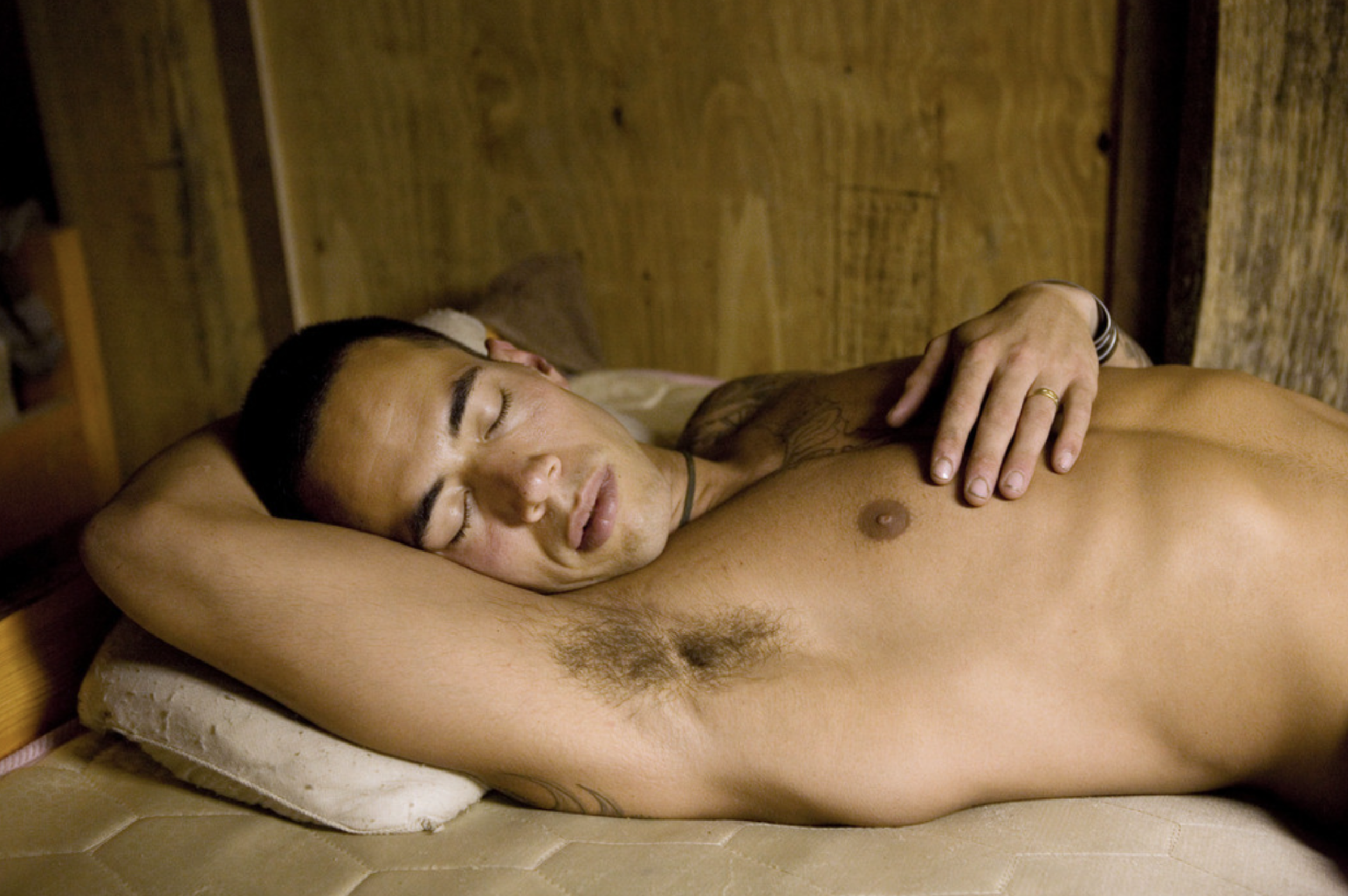
From Infidel, Tim Hetherington and Chris Boot.
Sleeping Soldier. Source: Magnum Photos.
Tim Hetherington was a well known, professionally respected, and admired photojournalist and film maker who was killed covering the civil war in Libya in 2011. He was killed the same day and in the same location as photographer Chris Hondros(next entry).
Much of his work in and around war zones does not focus on the battle, but on the people - the soldiers and the civilians - and how they are affected by war, or learn to live with war.
He was born in England and went to school there. After inheriting a small amount of money from his grandmother, he traveled through China, India and Tibet and decided he wanted to spend his career photographing the world. He returned to England and worked during the day and went to school at night to learn photography.
Hetherington conceived of many of his own projects, but also contributed regularly to Vanity Fair, a U.S. magazine known for in-depth reporting and high quality photography and art.
Hetherington worked several times with Sebastian Junger, who is best known as the author of the book: The Perfect Storm. The two worked together on the film; Restrepo based on a year in the life at a remote U.S. military base in Afghanistan.
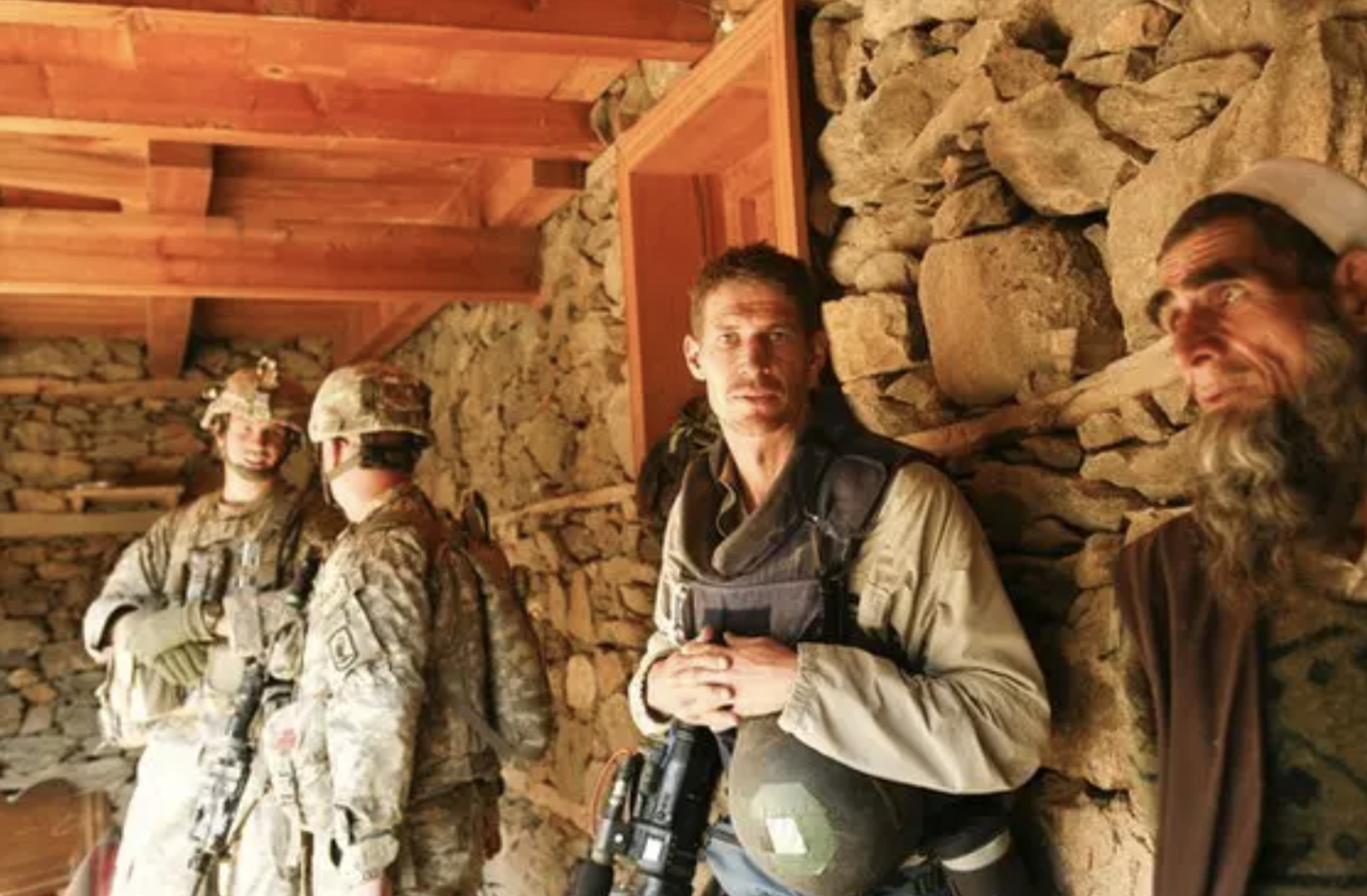
Tim Hetherington in Afgahnistan.
Source: HBO
Tim Hetherington, Infidel - Magnum Photos
Tim Hetherington, Photojournalist and Filmmaker - Imperial War Museum
Remembering Tim Hetherington - British Journal of Photography
Chris Hondros
1970-2011
(24)
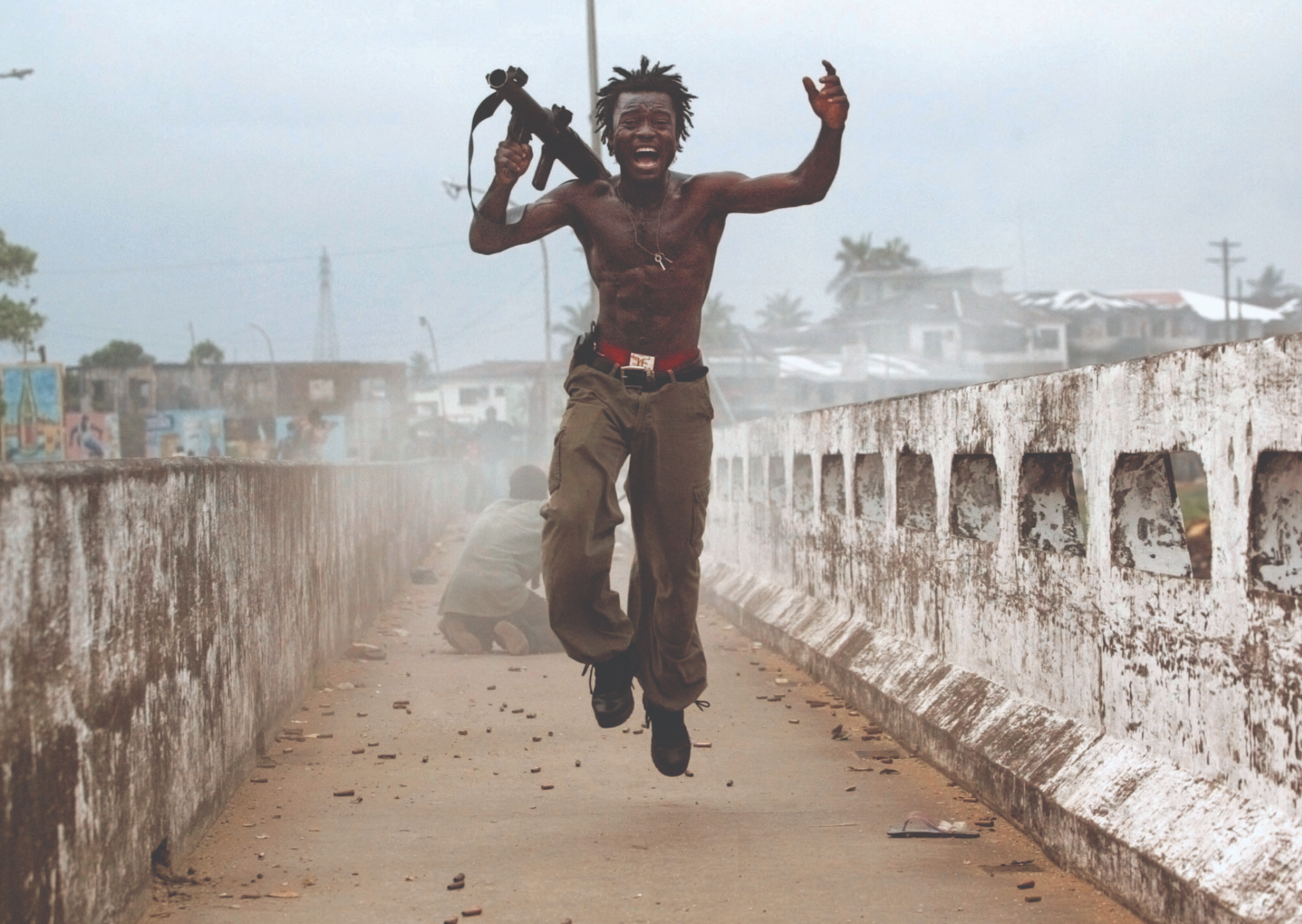
Liberian militia commander after firing a rocket propelled grenade.
Chris Hondros 2003. Chris Hondros Fund/Getty Images.
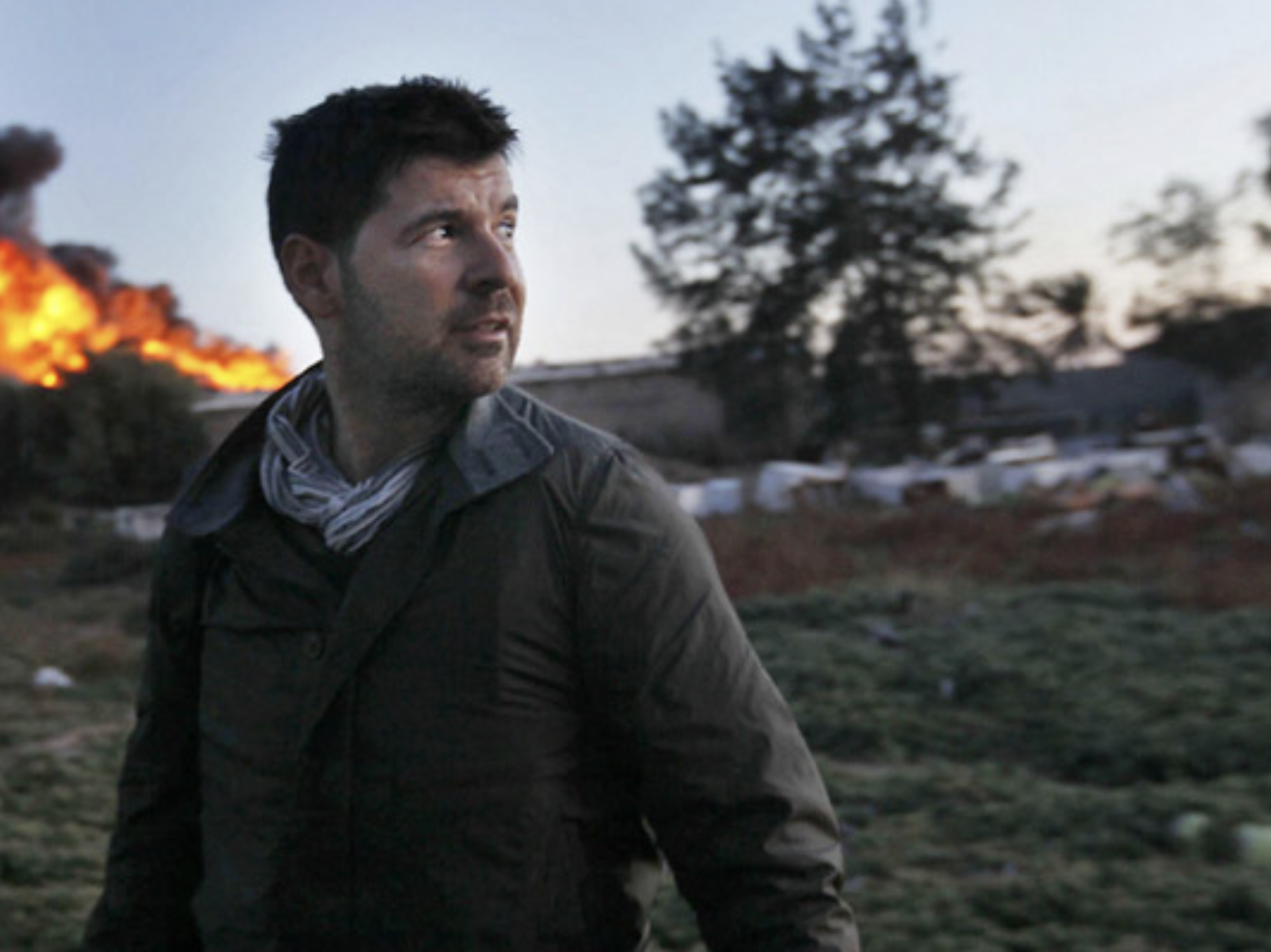
Born in New York City, Chris Hondros’s family moved to North Carolina where he grew up and went to college. He later earned a Master’s degree in visual communications from Ohio State University. He got his first newspaper job in Ohio, moved back to North Carolina, and then moved to New York to pursue his interest in international photography. His work appeared in the New York Times, The Washington Post, The Los Angeles Times, Newsweek and the Economist.
He worked covering conflicts around the world including; Liberia, the West Bank, Iraq, Afghanistan, Sierra Leone, Angola and Kosovo. He also covered American politics and natural disasters in the United States and overseas.
He was killed in Libya in 2011 on the same day and in the same location as Tim Hetherington(previous entry).
Katie Orlinsky, The Chris Hondros Fund.
Testament Gallery - The Chris Hondros Fund
Photo Tribute Chris Hondros - CBS News
Documentary Celebrates Work of Chris Hondros - PBS NewsHour
Annie Leibovitz
1949 -
(25)
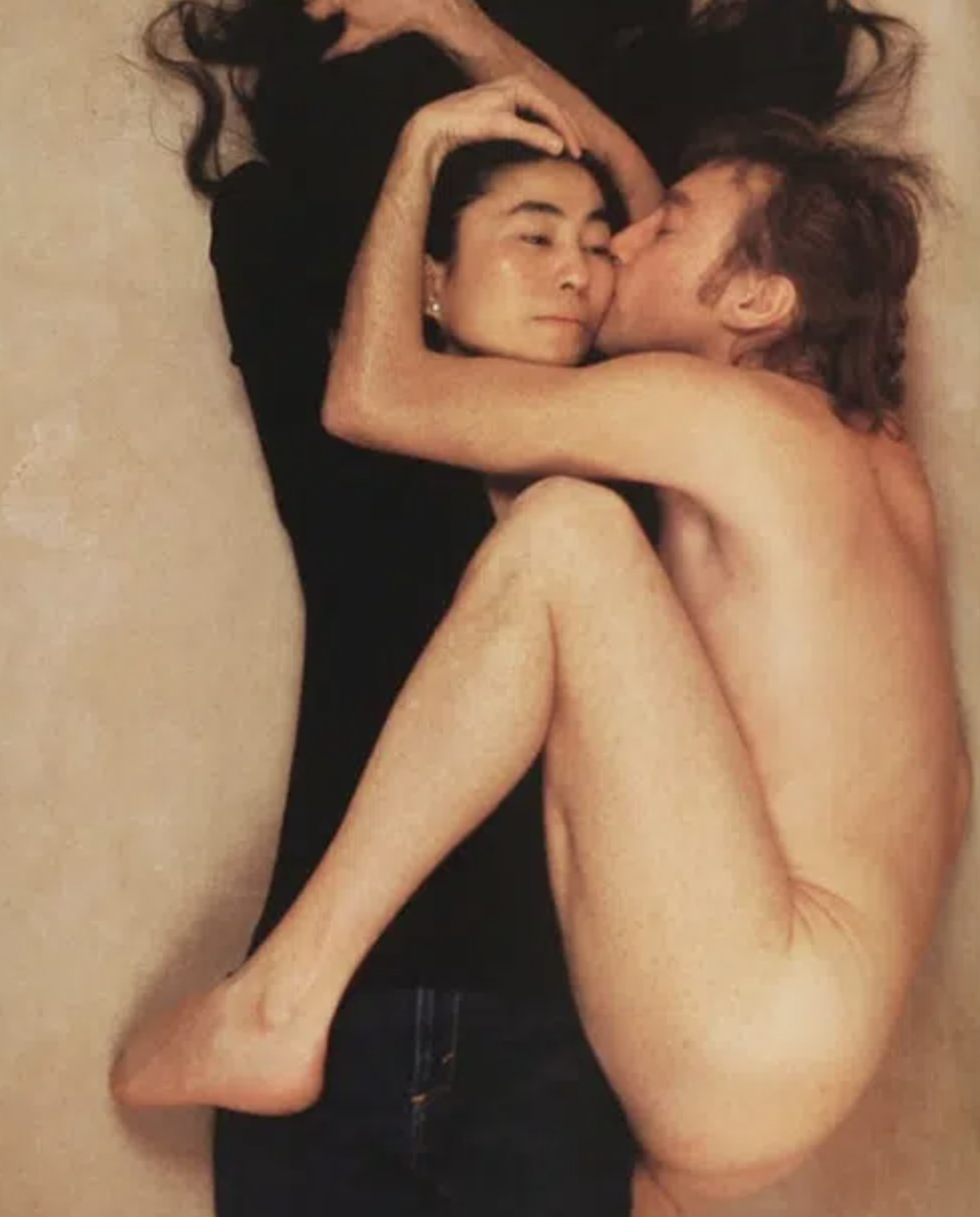
John Lennon and Yoko Ono, 1980.
For Rolling Stone © Annie Leibovitz
Annie Leibovitz was born in Waterbury, Connecticut and became interested in photography when her father gave her a camera. She moved a lot growing up because her father was in the military. After the family returned from an overseas deployment, Leibovitz enrolled at the San Francisco Art Institute. Some of her photographs in the early 1970s were published by Rolling Stone magazine. In 1973 she was named the magazine’s chief photographer. Much of her work focused on the culture around rock music and included candid behind the scenes photos and posed portraits.
In 1980 she took the photo at the top of this post in preparation for a more in depth photo shoot with John Lennon, formerly of The Beatles and his wife Yoko Ono. This shot was taken with a Polaroid camera. Five hours later Lennon was shot to death on the street outside his Manhattan apartment.
She eventually left Rolling Stone and became the chief portrait photographer for Vanity Fair magazine. While at Vanity Fair her approach and style of portraiture became more recognizable. She used dramatic lighting, unusual poses meant to convey a story, and large sets that resemble a movie production.
In 1991, her photo of a naked and pregnant Demi Moore - the actress - on the cover of Vanity Fair was a viral moment before there was such a thing as a viral moment. The photo was extremely controversial, because nothing like it had been published before by a mainstream magazine. There were protests against displaying the magazine on newsstands and in some places, like grocery stores, the cover was concealed by a wrapper so that the photo would not be visible to children.
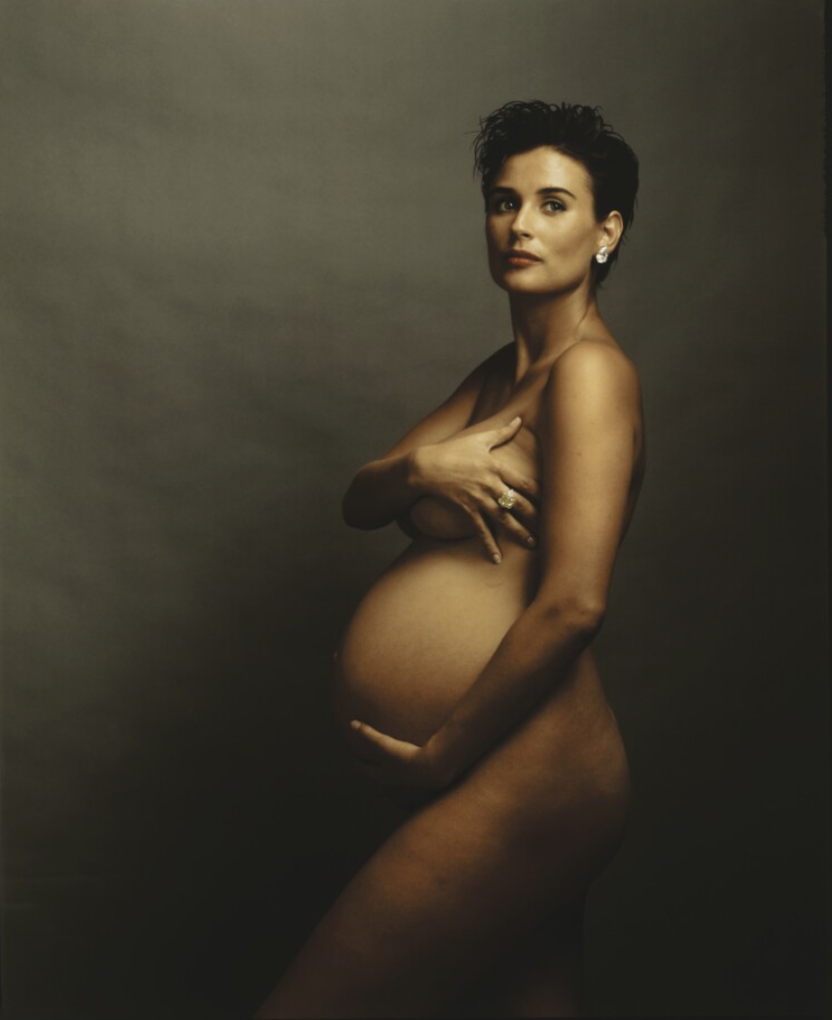
Demi Moore for Vanity Fair. 1991
© Annie Leibovitz
As time passed, the photo of Moore was seen as an empowering moment for women that changed the definition of feminine beauty.
Leibovitz is not a traditional daily photojournalist, but her work does include political and government leaders - along with celebrities - and her photos are used to illustrate stories in hard news and entertainment news publications. Daily news photographers tend to “take pictures” in an effort to record history. Leibovitz “makes pictures” to assist the delivery of the message behind the written story.
11 of Annie Leibovitz’s Most Talked About Photographs - 1STDibs.com
Pirelli 2016 Calendar Photo Shoot - Pirelli
Interview with the BBC - BBC
10 Questions With - TIME
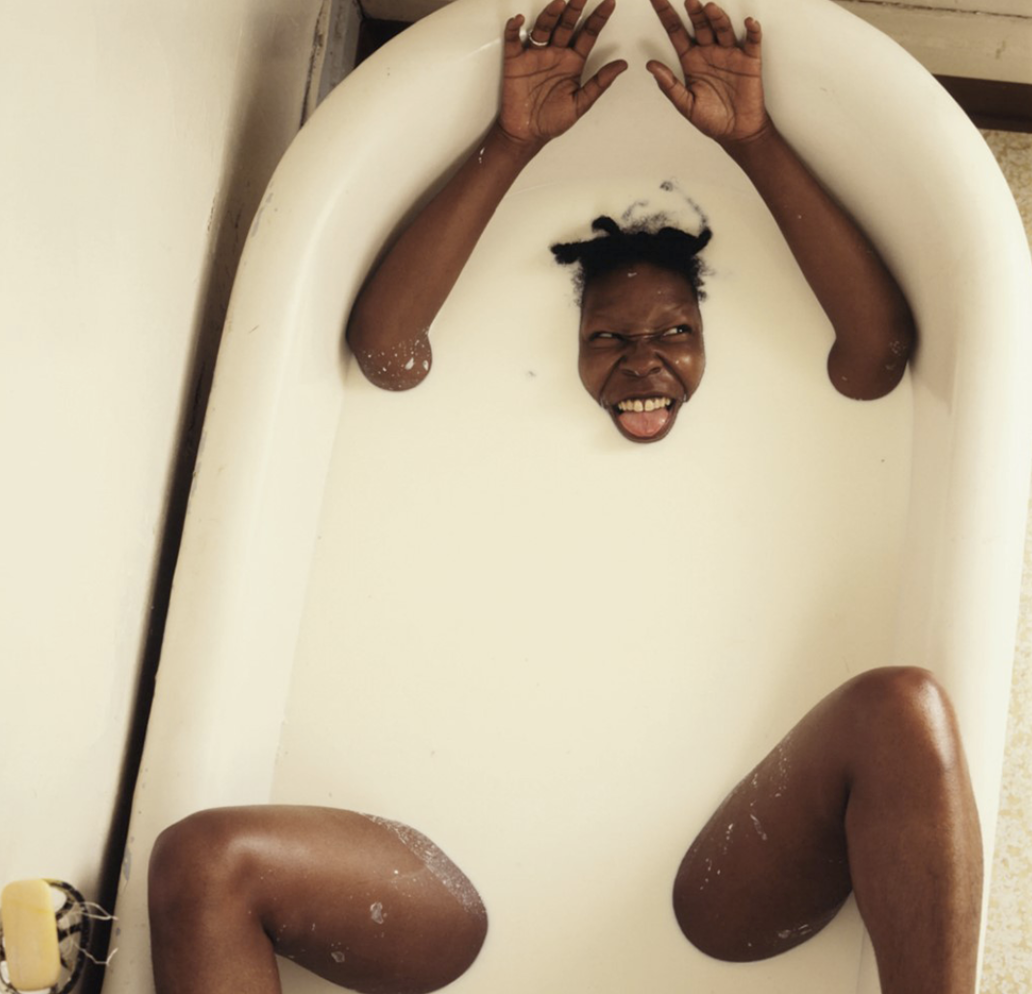
Whoopi Goldberg, Vanity Fair, 1984.
© Annie Leibovitz
Ami Vitale
1971 -
(26)
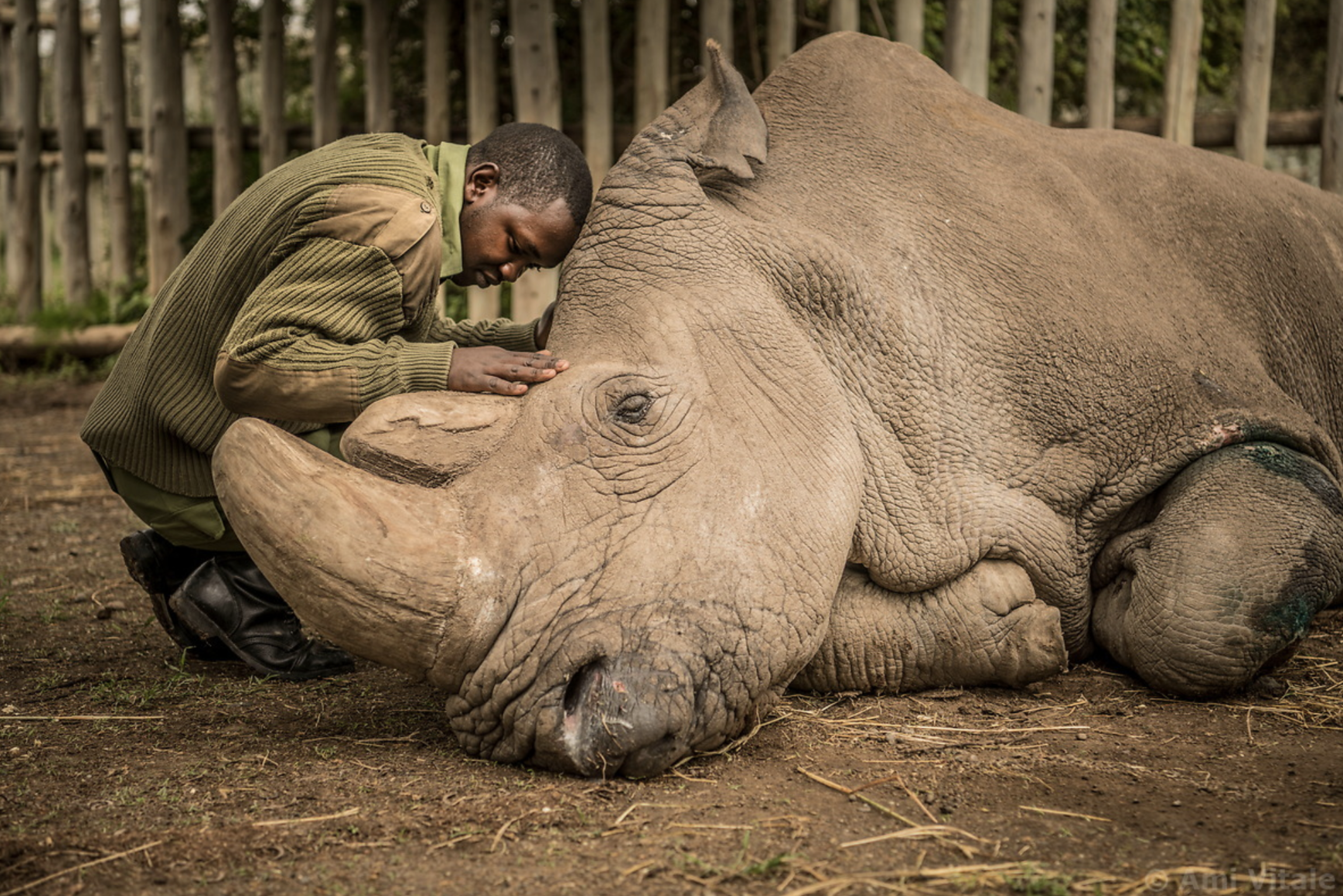
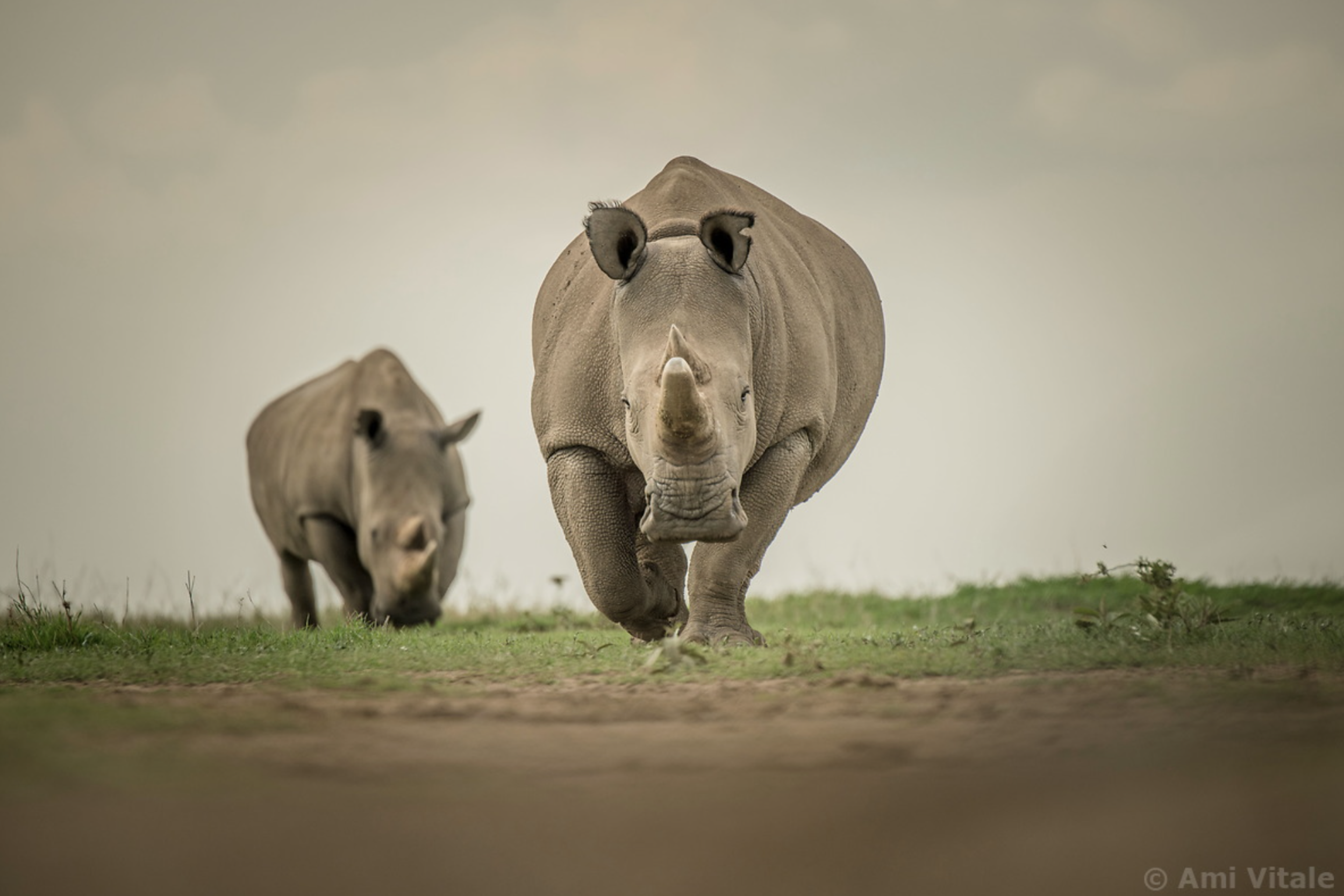
The passing of the last male Northern White Rhino on the planet. 2018.
© Ami Vitale
Many of the photographers featured in this series worked during a period of time when newspapers and magazines were the dominant force in news coverage. Most publications had full-time staff photographers. There were fewer images in the world competing for our attention. Many of the historic photos we consider “iconic” would have trouble breaking-through in our image saturated world.
With that as background, this post features a working photographer who has managed to find a way to use photography to tell stories that have an impact and make a living doing so.
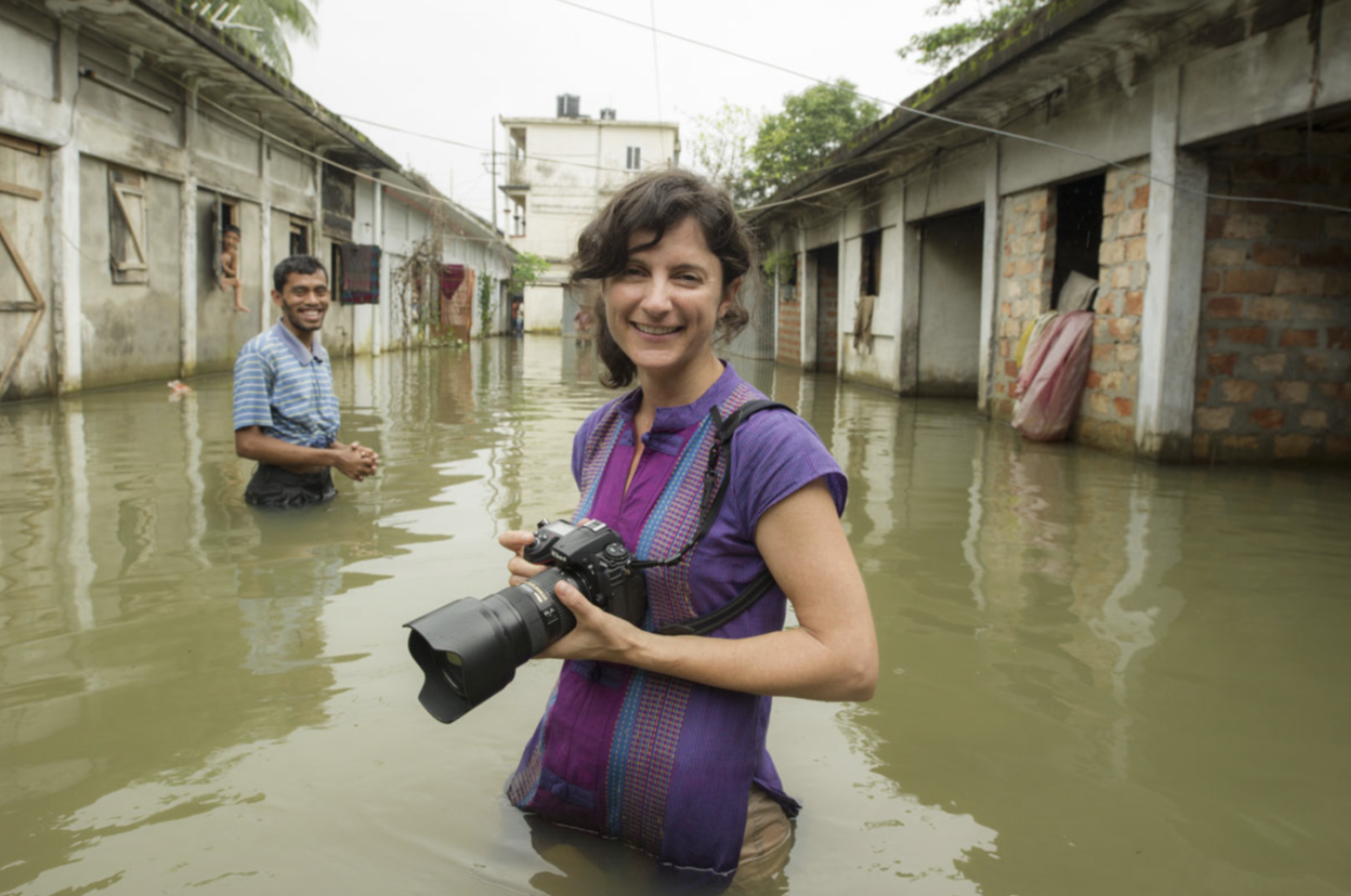
Ami Vitale was born in Florida and took an interest in photography at a young age. She began her professional career, after college, as a photo editor for the Associated Press in New York City and Washington, D.C.
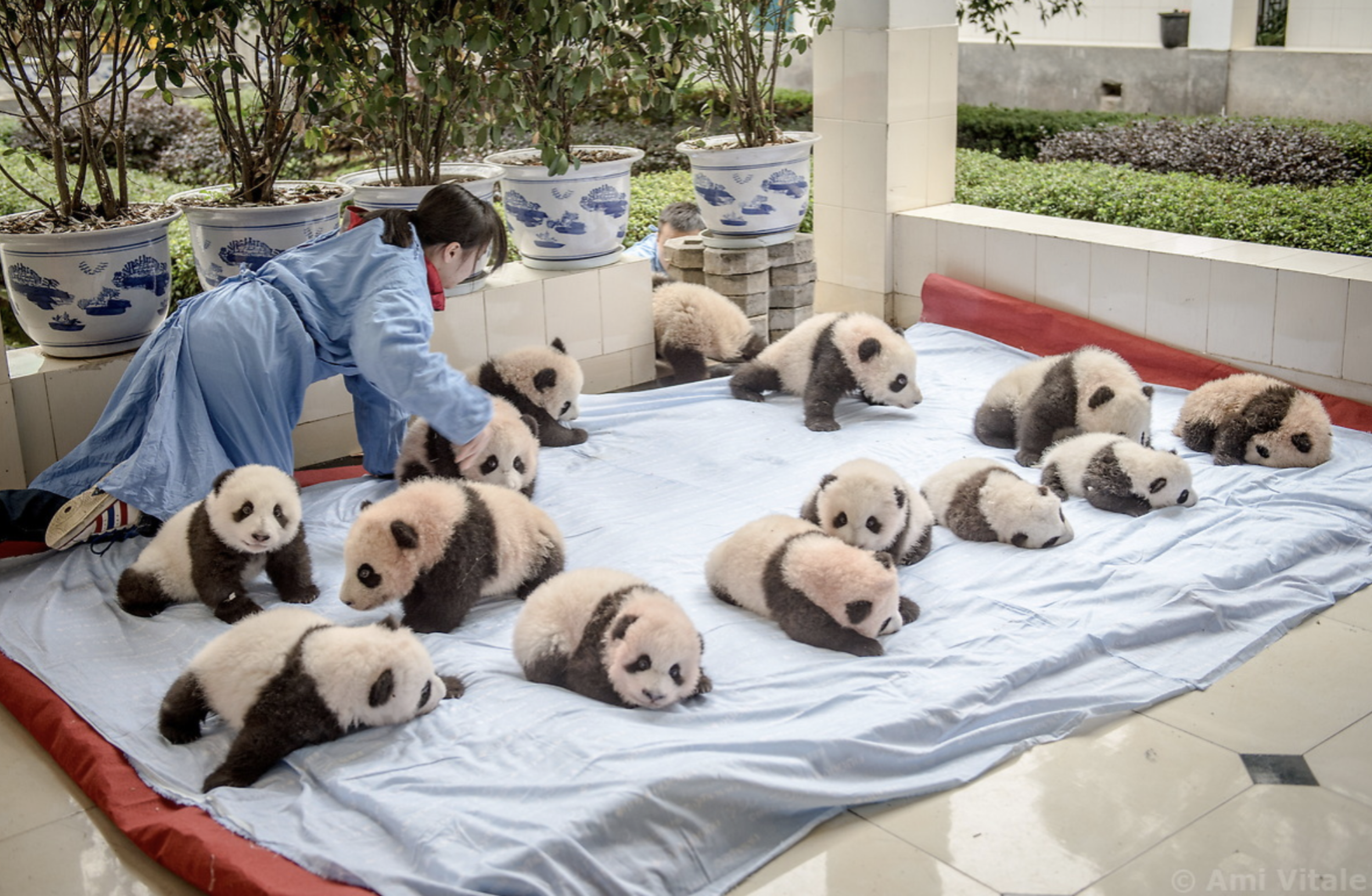
In 1997 she left the United States for Prague in the Czech Republic to cover the war in Kosovo. She self-funded her first independent reporting trip and went on to cover conflicts in Angola, Gaza, and Israel. She began to transition away from conflict reporting and toward environmental and conservation stories. Some of her work is funded through grants and non-profit organizations. She has worked regularly with National Geographic and is a documentary film maker, educator, and public speaker.
As we consider the history of photojournalism, Vitale’s approach to the profession demonstrates its continued relevance and impact.
Amy Vitale Bio - National Geographic
How to Photograph Hope - Storytellers Summit